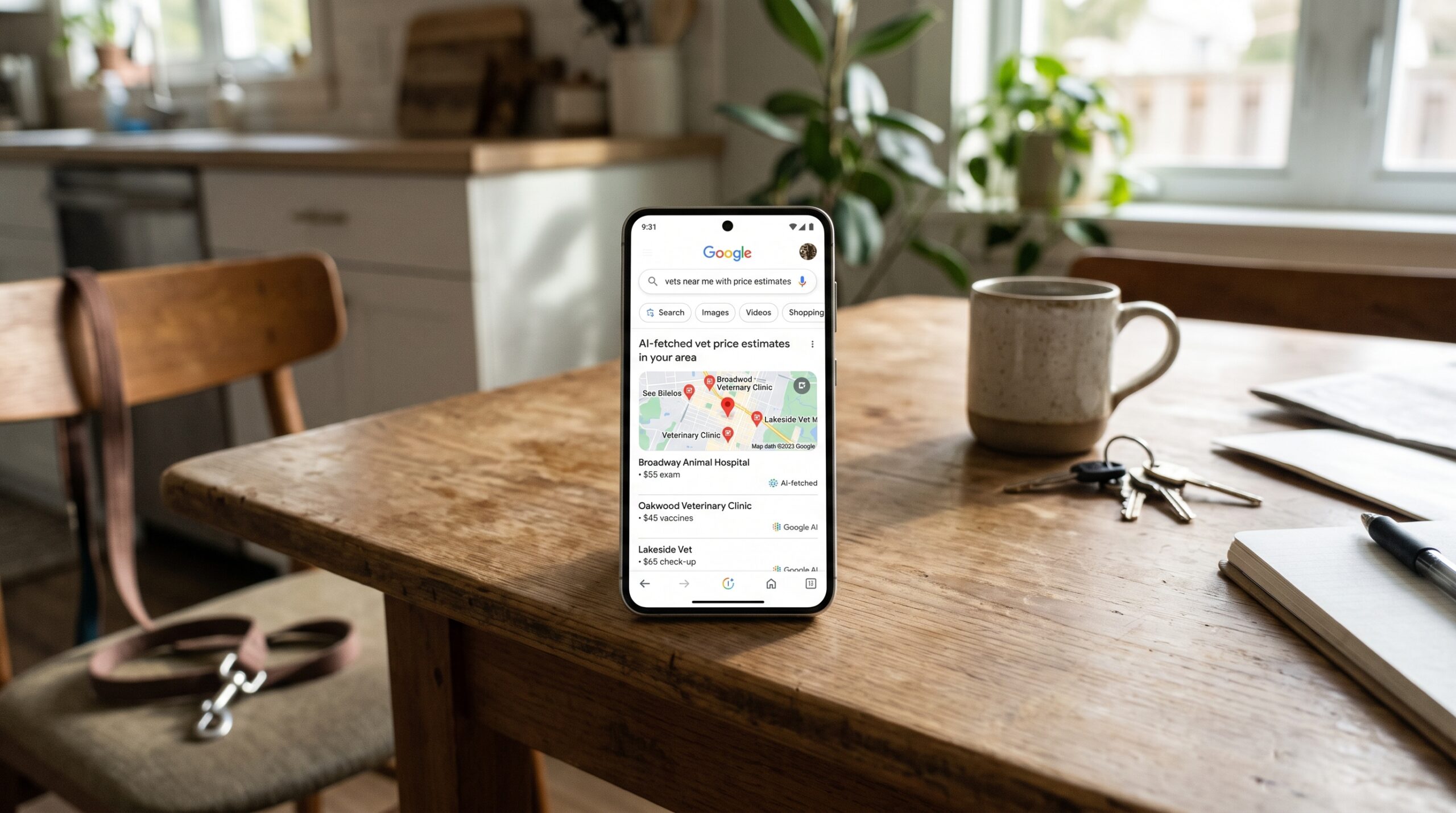
If your veterinary practice receives a phone call from an automated voice asking about appointment availability, pricing, or services, it may not be a traditional client calling. It could be Google’s AI calling on behalf of someone who is searching for veterinary care.
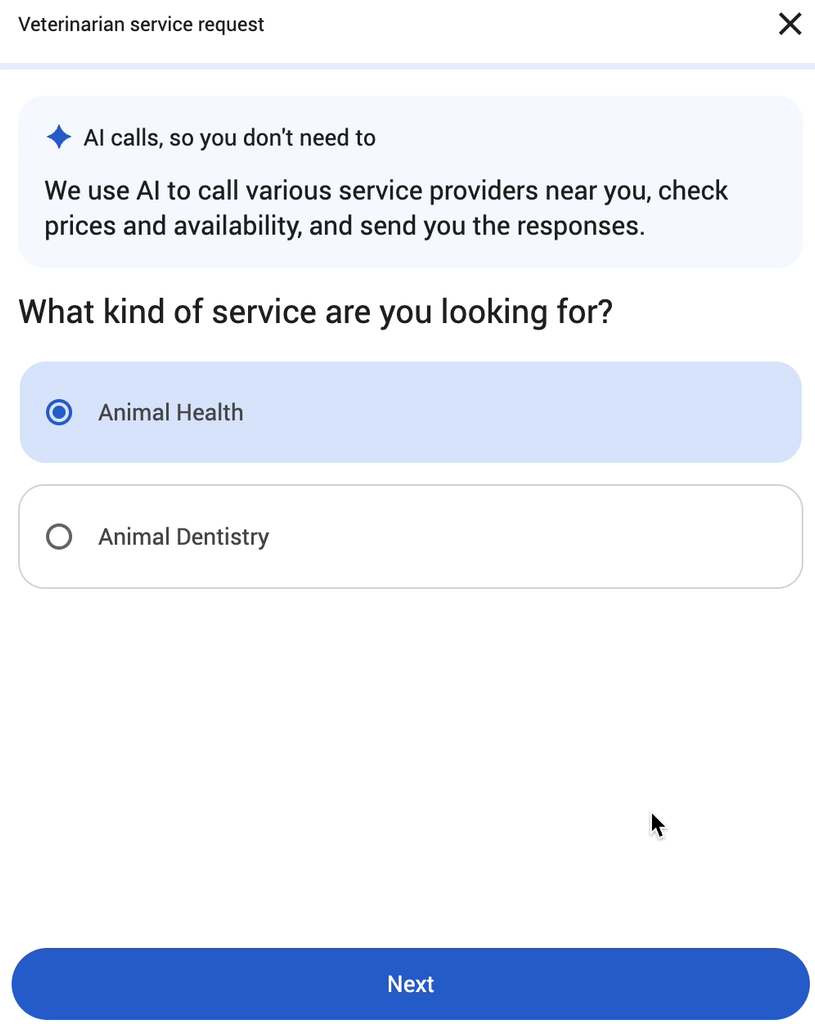
This is one of those changes in technology that can feel relatively small at first, but it represents something much bigger happening in how pet owners find and interact with veterinary practices.
For years, we’ve focused heavily on what happens when someone searches Google for a veterinarian: Where does your practice rank? How many reviews do you have? Is your website easy to use? Can someone quickly find your phone number or book an appointment?
Those things still matter tremendously. But increasingly, technology is beginning to do some of the work that the pet owner previously had to do themselves.
What Is Google’s AI Calling Feature?
Google has introduced AI-powered functionality that can contact local businesses on behalf of people searching for information. Instead of a potential client calling multiple veterinary practices themselves, Google may be able to gather information from businesses and present the results back to the person searching.
For example, someone might be looking for a veterinarian who can see their dog soon, trying to understand the cost of a particular service, or determining whether a practice offers something they need. Google’s technology may contact businesses to gather relevant information on that person’s behalf.
That means the voice on the other end of the phone may be automated, but there can still be a very real prospective client behind the request.
Why Veterinary Teams Need to Know This Is Happening
The biggest thing I want veterinary practices to do right now is simply make their teams aware.
Your CSRs and other team members answering the phone may encounter these calls without knowing what they are. And when something sounds unfamiliar or automated, it’s understandable that someone might not immediately know how the practice wants it handled.
This is a great opportunity for a quick team conversation. Make sure everyone knows these calls exist and decide internally how you want your practice to approach them so your response is consistent.
This isn’t about creating another complicated phone protocol. It’s about making sure your team isn’t caught off guard as technology changes around them.
Remember: There May Be a Pet Owner Behind the Technology
If your team chooses to provide information during one of these calls, think about the experience from the perspective of the person who may ultimately receive that information.
The interaction with AI might be happening between your practice and a piece of technology, but the information being collected could ultimately influence whether a pet owner chooses your hospital.
That makes accuracy important, but it also makes context important.
Pricing is a perfect example. Veterinary care isn’t always easy to compare based on a single number. The cost of an exam, diagnostic procedure, dental procedure, surgery, or other service may depend on what is included and what the individual patient needs.
When appropriate, practices should think about how they communicate value and context rather than allowing a single price to tell the entire story.
This Is Part of a Much Bigger Change in Search
This is also another example of why veterinary marketing is changing so quickly.
Pet owners increasingly expect technology to do more of the work for them. They can ask AI detailed questions, receive recommendations, compare options, summarize information, and, in some cases, have technology interact with businesses on their behalf.
That has significant implications for veterinary practices.
Your website can no longer exist solely to impress the person who lands on it. The information about your practice also needs to be clear and understandable to the search engines and AI platforms interpreting that information for consumers.
It’s one of the reasons our team at Tapir has been investing so heavily in Answer Engine Optimization, or AEO, alongside traditional SEO. We want Google, ChatGPT, and other AI-powered platforms to clearly understand who a veterinary practice is, where it’s located, what services it provides, and the questions it’s qualified to answer.
The phone call is just another extension of that evolution.
Don’t Panic. Just Have a Plan.
Google continually tests, changes, expands, and sometimes abandons features. We don’t know exactly what every AI-powered search experience will look like a year from now, and veterinary practices don’t need to chase every new technology that appears.
But we do need to pay attention.
For now, the most important thing is awareness. Let your team know these calls are happening. Decide how your practice wants them handled. Think about the information you’re comfortable providing and how you want things like pricing communicated when context matters.
Most importantly, recognize what this represents.
The way pet owners find veterinary care is changing. Increasingly, the first interaction someone has with your practice may not happen on your website, through a phone conversation, or even directly with another human being.
It may happen through AI.
And the veterinary practices that understand that shift early will be much better prepared for where client behavior is headed next.
Got questions? Feeling curious? Just want to say hi? We’re always up for a chat. Until next time — stay curious, stay visible, and never stop foraging for greatness. 🌿